EVIDENCE 008 | NATIONAL INFRASTRUCTURE INVESTIGATION
AMERICA'S
EDUCATION SYSTEM
FORENSIC AUDIT
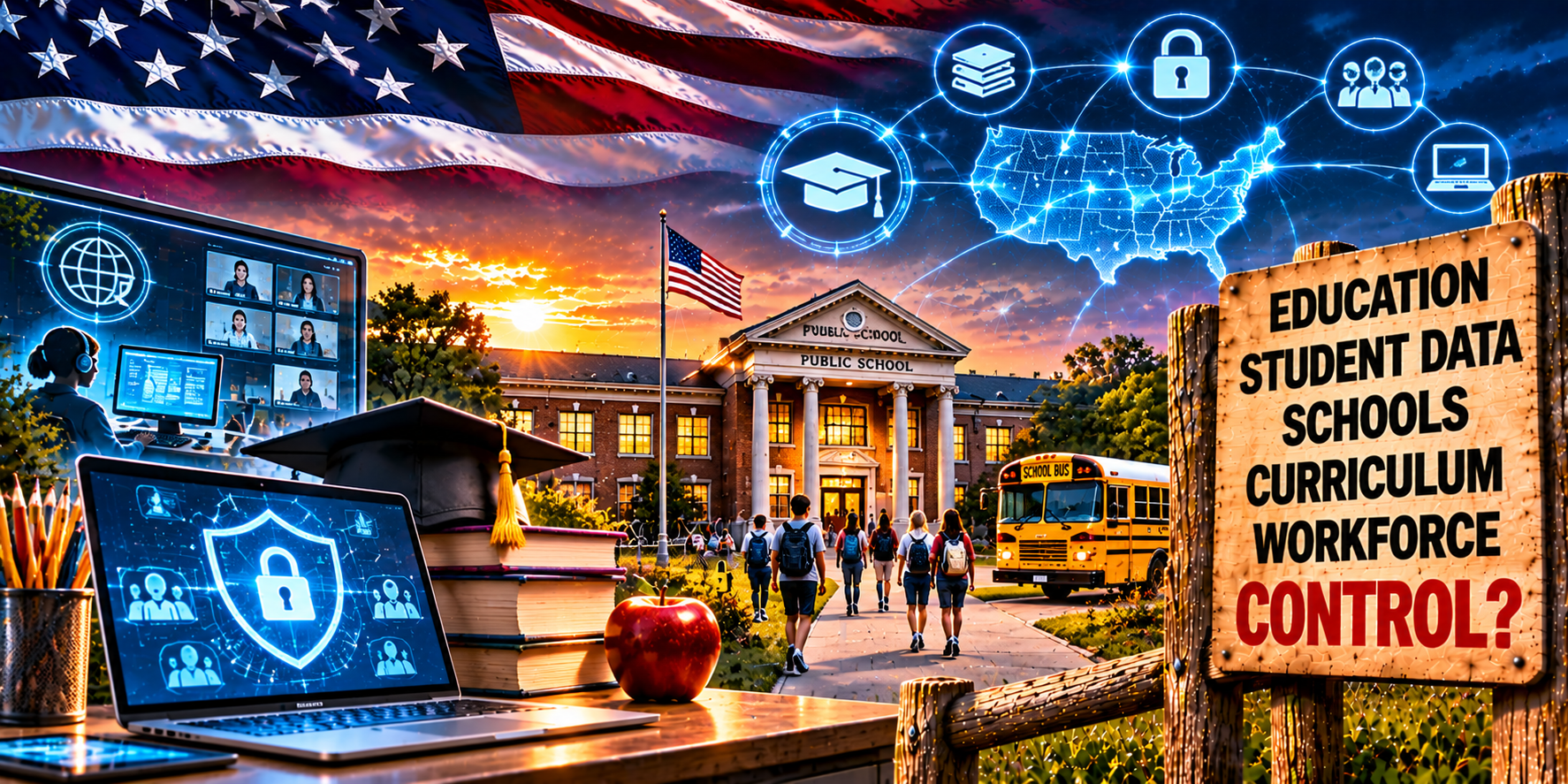
Who Governs Education, Protects Student Data, and Secures the Future of Learning?
Follow the evidence through school governance, privacy, digital learning, infrastructure, workforce preparation and cybersecurity resilience.
OPEN THE INVESTIGATION COMMAND CENTER& CONTROL
& PRIVACY
INFRASTRUCTURE
WORKFORCE
& RESILIENCE
01 | Documented Incidents
When Education Technology Fails, Learning and Privacy Are at Risk
Schools depend on connected records, identity systems, cloud platforms, networks, staff and public funding. Investigate documented incidents rather than assuming every disruption is malicious.
Los Angeles Unified School District — 2022
A ransomware attack disrupted district technology services and exposed sensitive information. Examine official district statements, incident chronology and response actions.
PowerSchool — 2024/2025
A cybersecurity incident involving the student-information-system provider led to unauthorized access to data associated with schools. Investigate confirmed data categories, affected institutions and notification practices.
COVID-19 School Closures — 2020
Widespread closures exposed gaps in broadband, devices, remote learning access and continuity planning. These disruptions were not themselves cyberattacks.
Shared Digital Dependencies
A single vendor outage can affect multiple districts. Quantify concentration, recovery objectives and alternatives before asserting a systemic failure.
02 | Historical Reconstruction
How Education Governance and Technology Changed
1965Elementary and Secondary Education Act
Federal education funding expanded under the ESEA. Examine how funding conditions interact with state and local education responsibilities.
1974Family Educational Rights and Privacy Act (FERPA)
FERPA established federal protections for education records in covered institutions. Investigate applicability, permitted disclosures and parent/eligible-student rights.
1979–80U.S. Department of Education Established
Federal departmental organization changed; school curriculum and operations generally remain primarily state and local responsibilities. Trace actual statutory authority.
2001–02No Child Left Behind
Federal accountability requirements reshaped assessment and reporting. Evaluate effects using comparable education data rather than assuming causation.
2015Every Student Succeeds Act
ESSA revised federal accountability and state flexibility. Compare legal requirements, implementation and measured outcomes.
2020Remote Learning and Connectivity Dependence
School closures revealed disparities in devices, broadband and access to instructional support. Compare official district, state and federal data.
2022–25Ransomware and Student-Data Provider Incidents
Document district and vendor incidents with verified timelines, affected systems, records exposure and restoration evidence.
03 | Decision Rights
Who Actually Governs American Education?
Control must be defined precisely: legal authority, funding conditions, curriculum adoption, technology procurement and data access are distinct.
Federal Government
Review federal civil-rights, privacy, education funding and accountability roles, without conflating funding influence with local operational control.
States and State Boards
Trace compulsory attendance rules, academic standards, licensing, assessment requirements and statewide technology policies.
Local Districts and School Boards
Examine budgets, procurement, employment, district policies, local curriculum decisions and public accountability.
Vendors and Contractors
Determine what data and operational permissions are delegated through student-information systems, learning platforms and cloud contracts.
04 | Student Records
Who Can Collect, Access, Share and Retain Student Data?
Student information may include grades, attendance, disciplinary records, accommodations, contact details and authentication data. Each category requires lawful handling and proportionate security.
FERPA and State Privacy Laws
Verify which records and institutions are covered, lawful disclosure bases, parent and eligible-student rights and applicable state-specific protections.
Vendor Access and Retention
Inventory processors, sub-processors, retention periods, data sharing, deletion commitments and breach notification terms.
Identity and Authentication
Review account provisioning, staff privileges, MFA, phishing resistance, session controls and removal of departing users.
Incident Response
Assess what data was actually exposed, notification timelines, containment, monitoring and recovery rather than treating all incidents as identical.
05 | Infrastructure and Dependencies
What Keeps Schools Operating Every Day?
Trace the dependencies supporting teaching, transportation, safety, administration, nutrition and future workforce preparation.
Buildings and Essential Services
Electricity, water, HVAC, physical access, emergency communications and safe transportation.
Digital Learning and Records
Broadband, identity services, learning management systems, student information systems, endpoints and cloud services.
Curriculum and Workforce
Teacher capacity, technical training, career pathways, accessibility, industry partnerships and evidence-based educational outcomes.
Cascading Failure Analysis
Test loss of internet, ransomware, a shared student-data vendor, a severe-weather closure and an extended power outage.
06 | SWOT / TOWS
Turn Observed Weaknesses Into Measurable Corrections
Strengths and threats should be assessed by district and jurisdiction; the following is a structured audit framework, not a completed national scorecard.
SWOT — Identify
Strengths: local governance, dedicated educators and public institutions. Weaknesses to test: legacy systems, uneven funding, vendor concentration and staffing gaps. Opportunities: secure platforms and workforce pathways. Threats: ransomware, data breaches, disasters and service disruptions.
TOWS — Correct
Use local oversight to improve vendor transparency; prioritize identity hardening and resilient connectivity; coordinate state and district exercises; reduce untested single points of failure.
Evidence Thresholds
Separate anecdotal claims from documented policies, contracts, audit findings and comparable outcome data.
Accountability
Assign each finding an owner, risk rating, corrective deadline, verification test and follow-up review.
07 | Prevent and Rebuild
Protect Students, Preserve Learning and Strengthen Local Resilience
Practical corrective measures must protect privacy while sustaining learning during outages and emergencies.
Families and Students
Understand school privacy notices, use strong authentication, confirm official communications and know how to report suspected exposure.
School Districts
Inventory systems and vendors, minimize collected data, enforce least privilege, protect backups, test restoration and maintain offline instruction and attendance procedures.
State and Local Leaders
Publish governance decisions, audit vendor contracts, support district incident response and track security and learning continuity outcomes.
Workforce and Communities
Build practical cyber literacy, apprenticeships and technical education pathways; verify that training improves access and employment outcomes.
08 | Source Register
Primary Sources and Verification Priorities
Federal education programs, policy and student privacy resources
FERPA guidance and student privacy
Education statistics and longitudinal datasets
K–12 cybersecurity and resilience resources
Children's privacy and consumer protection guidance
Independent audits of education programs and technology risks
INVESTIGATE. VERIFY. CORRECT. REBUILD.
Evidence 008 | America's Education System Security — FORENSIC AUDIT
RETURN TO FORENSIC AUDIT COMMAND CENTER