EVIDENCE 005 | NATIONAL CRITICAL INFRASTRUCTURE INVESTIGATION
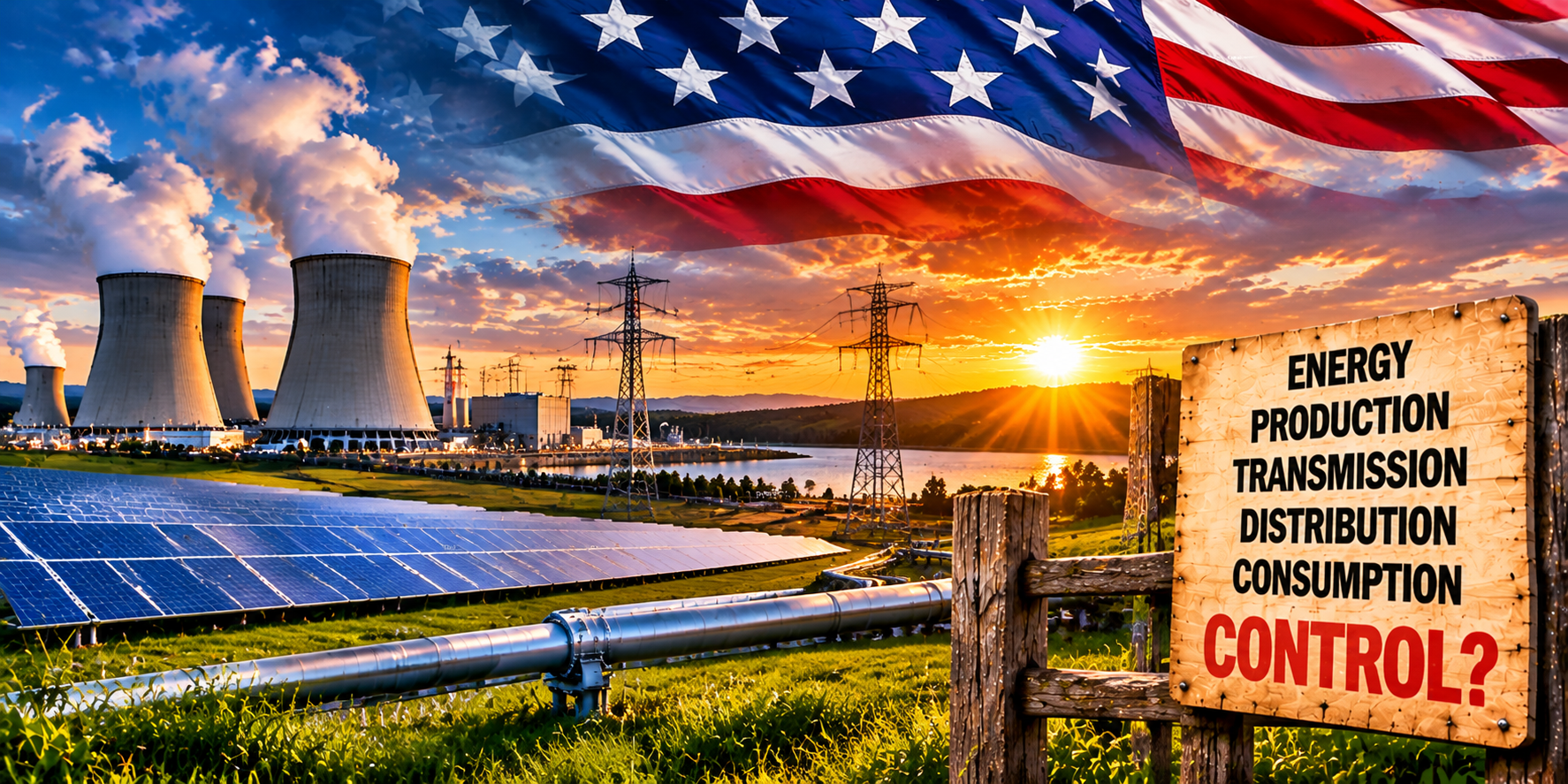
AMERICA'S
ENERGY SECURITY
& GRID RESILIENCE
FORENSIC AUDIT: Who Controls Our Energy — and How Secure Is the Grid?
Follow the evidence from generation and fuel supplies to transmission, distribution, operational technology, and the systems that keep America's essential services powered.
OPEN THE INVESTIGATION COMMAND CENTER& RESOURCES
INFRASTRUCTURE
CRITICAL FACILITIES
CONTROL SYSTEMS
DEPENDENCIES
01 | Documented Failure
When the Grid Fails, What Else Stops?
Electricity is a foundational dependency for drinking water, hospitals, communications, food refrigeration, transportation, financial transactions and industrial operations. This FORENSIC AUDIT begins with documented failures and reconstructs their technical, regulatory and operational causes.
2003 Northeast Blackout
A cascading outage affected large portions of the northeastern United States and Canada. The U.S.–Canada Power System Outage Task Force documented failures involving situational awareness, vegetation management and reliability coordination. This event illustrates how local problems can propagate through an interconnected grid.
2021 Texas Winter Emergency
Extreme winter weather caused widespread electricity disruptions. Federal reviews identified failures across generation, fuel supply and cold-weather preparedness. Examine the evidence by generation technology, natural-gas infrastructure, operating conditions and policy responsibilities rather than attributing the event to one cause.
2015 Ukraine Electric-Grid Attack
Cyber intrusions contributed to power outages at Ukrainian distribution utilities. This is an international case study of operational technology risk—not proof that an identical compromise has occurred in a U.S. grid operator.
2022 Moore County, North Carolina
Attacks on electrical substations caused a major local outage. This case highlights the importance of physical protection, response coordination, spare equipment and restoration planning.
02 | Historical Reconstruction
Major Turning Points in Energy Reliability and Security
Expand each milestone to examine the decision, observed consequence and forensic question.
1965Northeast Blackout and Regional Reliability Coordination
The 1965 blackout helped spur organized regional reliability efforts. Investigate how interconnection expanded both service benefits and potential cascading-failure pathways.
1992–96Wholesale Electricity Competition and Transmission Access
Federal energy policy and FERC Orders 888/889 reshaped wholesale transmission access. Investigate which entities own assets, operate the grid, regulate rates and bear reliability responsibilities; these roles are not interchangeable.
FERC — Federal Energy Regulatory Commission2003Northeast Blackout and Cascading Failure
The joint U.S.–Canada investigation identified preventable reliability failures. Review the task-force report, event chronology, monitoring systems and corrective recommendations.
U.S. Department of Energy — Reports and resources2005Mandatory Bulk-Power Reliability Standards
The Energy Policy Act of 2005 established a federal framework for mandatory, enforceable reliability standards for the bulk-power system. Investigate scope, compliance, exceptions and implementation.
NERC — Reliability standards2015Ukraine Grid Cyberattack
Examine publicly documented intrusion and operational impacts, the limits of attribution evidence, and lessons for network segmentation, remote access and manual restoration.
CISA — Cybersecurity advisories2021Texas Extreme-Weather Grid Crisis
Federal reviews described failures across power generation, natural-gas supply and weatherization. Separate confirmed findings from claims about intent or a single responsible technology.
FERC — Cold-weather reliability reviews2022Moore County Substation Attacks
Physical attacks disrupted electrical service. Evaluate equipment protection, local emergency response, replacement-part availability and restoration resilience.
03 | Ownership and Decision Rights
Who Owns, Operates and Regulates America's Energy Systems?
Generation Owners
Investigate investor-owned utilities, public utilities, cooperatives, independent power producers and federal power entities. Identify actual asset ownership and contractual control.
Transmission and Grid Operators
Distinguish transmission owners from regional transmission organizations, independent system operators and balancing authorities. Determine who dispatches power and manages reliability.
Regulators and Reliability Bodies
Map the roles of FERC, state public utility commissions, NERC and regional reliability organizations. Identify jurisdictional boundaries and enforcement authority.
Fuel and Equipment Suppliers
Identify dependencies involving natural gas, coal, nuclear fuel, transformers, control equipment, software, spare parts and skilled labor. Supplier concentration does not itself establish malicious control.
04 | System Dependency Mapping
Trace Electricity From Primary Energy to Essential Services
Upstream Dependencies
Natural-gas production and pipelines, fuel logistics, cooling water, power-plant maintenance, telecommunications, equipment manufacturing and replacement transformers.
Downstream Cascades
Water pumping and treatment, refrigerated food, emergency healthcare, traffic controls, data centers, cellular communications, payment processing and household safety.
Failure-Mode Analysis
Test loss of generation, transmission congestion, equipment damage, communications loss, fuel curtailment, severe weather and prolonged restoration.
Resilience Controls
Evaluate redundant feeders, islandable microgrids where appropriate, tested backup generation, fuel continuity, manual operating procedures and mutual assistance.
05 | Cybersecurity and Operational Technology
Can the Grid Operate Safely When Digital Systems Are Compromised?
Attack Surface
Review remote access, vendor connections, identity systems, IT/OT boundaries, industrial control systems, monitoring tools, software updates and supply-chain exposure.
Preventive Controls
Apply asset inventory, strong authentication, least privilege, segmentation, secure engineering access, patch governance, monitoring, incident exercises and physical safeguards.
Safe Operations
Validate protective relays, operational interlocks, offline procedures, communications fallback, restoration authority and coordination with emergency managers.
Evidence Requirements
Distinguish vulnerabilities, intrusion attempts, confirmed compromises and actual service impacts. Never infer a cyber cause from outage symptoms alone.
06 | SWOT / TOWS
Convert Documented Weaknesses Into Defensible Corrective Strategy
SWOT — IDENTIFY
- Strengths: Diverse energy resources, experienced operators, established reliability frameworks and mutual-assistance networks.
- Weaknesses to test: Aging assets, fuel coupling, limited spares, regional bottlenecks and inconsistent resilience planning.
- Opportunities: Modernized protection, resilient local resources, improved weatherization, training and stronger vendor assurance.
- Threats: Extreme weather, equipment failures, physical attacks, cyber incidents and prolonged supply disruption.
TOWS — CORRECT & PREVENT
- Strength + Opportunity: Use utility expertise and standards to validate high-priority infrastructure upgrades.
- Weakness + Opportunity: Address identified bottlenecks with measured investment and tested restoration capability.
- Strength + Threat: Exercise coordinated emergency response across grid, water, health and telecommunications operators.
- Weakness + Threat: Prioritize credible single points of failure with owner-assigned mitigation and verification dates.
07 | Prevention and Resilience
Protect Essential Energy Services Before the Next Failure
Households
Inventory medically necessary electrical loads, plan safe outage communications, prepare lighting and food safety, and use professionally installed backup power with proper transfer protection.
Small Businesses
Identify critical processes, test UPS runtime and graceful shutdown, protect network equipment, maintain offline contact lists and document restoration priorities.
Utilities and Operators
Map dependencies, validate cold-weather readiness, harden IT/OT access, maintain critical spares, test backup communications and conduct black-start or restoration exercises as applicable.
Communities and Policymakers
Coordinate cross-sector continuity plans, prioritize critical facilities, assess local generation and fuel options, review investment outcomes and publish transparent reliability metrics.
08 | Evidence Register
Primary Agencies, Official Records and Open Verification Work
Electricity data, generation mix and industry statistics
Grid regulation, reliability and official investigations
Reliability standards, assessments and event analysis
Energy security, emergency response and infrastructure research
Critical infrastructure security and industrial-control guidance
Nuclear generation safety and regulatory oversight
INVESTIGATE. VERIFY. CORRECT. REBUILD.
Evidence 005 | America's Energy Security — FORENSIC AUDIT
RETURN TO FORENSIC AUDIT COMMAND CENTER