EVIDENCE 007 | NATIONAL CRITICAL INFRASTRUCTURE INVESTIGATION
AMERICA'S
HEALTHCARE
SYSTEM SECURITY
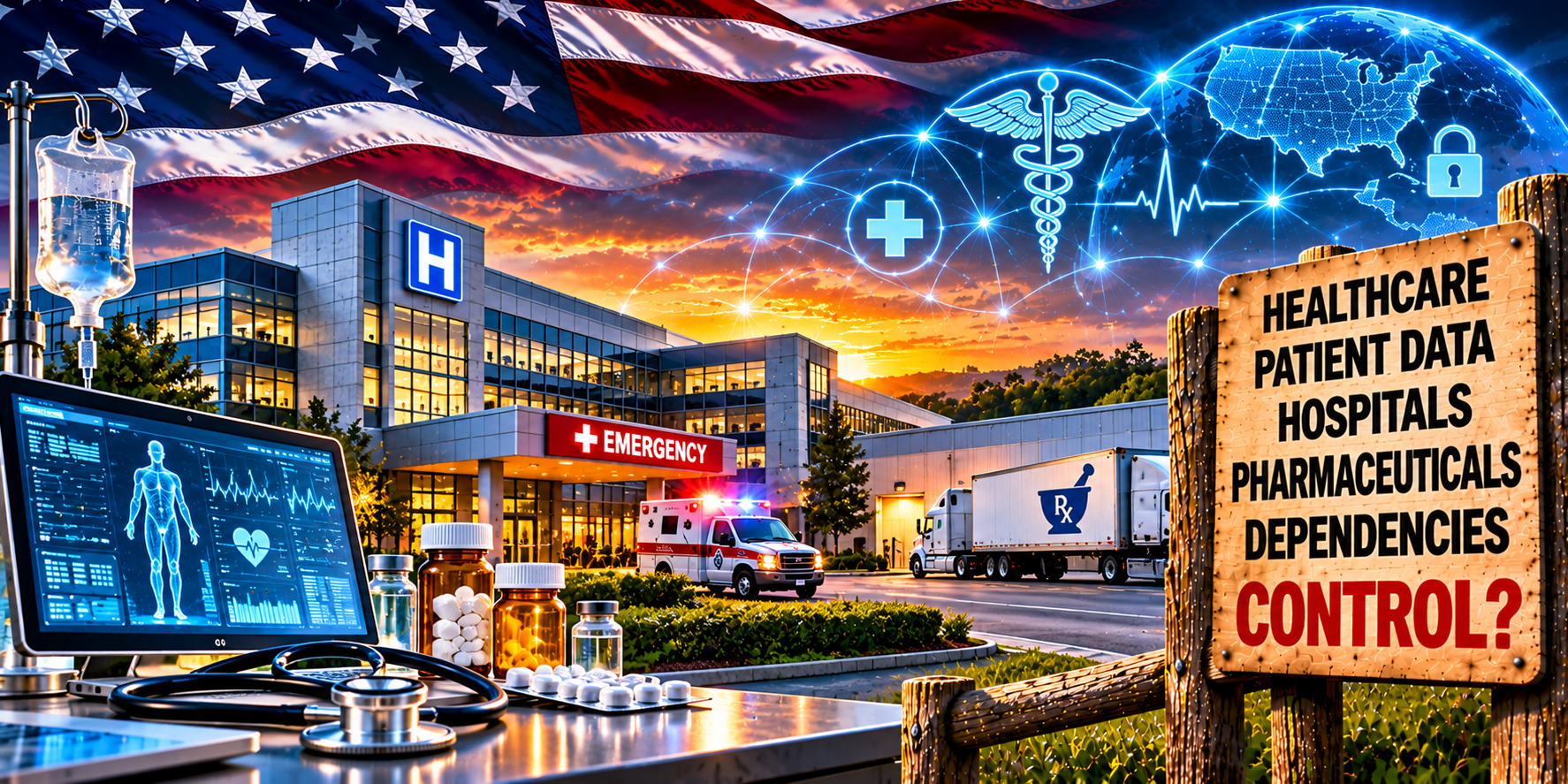
FORENSIC AUDIT: Who Controls Healthcare Access, Patient Data & the Systems That Sustain Care?
Follow the evidence across hospitals, insurers, patient records, medical devices, pharmacies, payment intermediaries and the dependencies that determine continuity of care.
OPEN THE INVESTIGATION COMMAND CENTEROWNERSHIP & ACCESS
DIGITAL IDENTITY
MEDICAL SYSTEMS
SUPPLY CHAINS
RESILIENCE
01 | Documented Disruption
When a Healthcare Intermediary Fails, Care Across the Country Can Be Disrupted
The February 2024 Change Healthcare cyberattack disrupted healthcare claims and payment processes across the United States. This case provides a documented starting point for investigating concentrated dependencies, cyber access, recovery, patient impact and the ability of providers to operate when an intermediary is unavailable.
Change Healthcare — 2024
Ransomware and related disruption affected claims processing and healthcare payment workflows. Examine the HHS response, company disclosures, patient notification and restoration sequence separately.
Ascension — 2024
A cybersecurity incident disrupted technology systems across the health network. Investigate documented effects on clinical workflows, electronic records and downtime procedures.
Universal Health Services — 2020
A cyberattack disrupted IT systems at the hospital operator. Examine publicly reported care-delivery impacts and the distinction between technology outages and verified clinical outcomes.
How Many Dependencies Are Shared?
Which providers, pharmacies and insurers depend on the same claims processor, cloud platform, electronic health record vendor or communications provider? Quantify before asserting concentration risk.
02 | Historical Reconstruction
How Healthcare Became a Digitally Interdependent System
1965Medicare and Medicaid Established
Investigate how public coverage programs changed financing, access and administrative dependencies, using CMS historical materials.
1996HIPAA Enacted
Distinguish privacy and security requirements from guarantees that all healthcare information systems are protected against disruption.
2009HITECH and Electronic Health Record Adoption
The HITECH Act promoted adoption of health information technology. Investigate documented benefits and the emergence of electronic record availability as an operational dependency.
2016Healthcare Ransomware Becomes a Visible Operational Threat
Use documented hospital incidents to examine downtime, recovery, backups and patient care continuity without overstating clinical effects.
2020Pandemic Stress and Healthcare Supply Constraints
Review verified shortages, workforce strain and distribution vulnerabilities. Separate emergency demand shocks from longer-term concentration claims.
2024Change Healthcare and Ascension Cyber Incidents
Reconstruct the separate incident timelines and measure service interruptions, recovery efforts and documented downstream consequences.
03 | Ownership and Authority
Who Owns Healthcare Facilities, Sets Rules and Controls Access?
Hospitals and Health Systems
Distinguish nonprofit, investor-owned, public and independent facilities. Track mergers, local service availability, closures and documented ownership changes.
Insurers and Payment Intermediaries
Map insurance administration, pharmacy benefit managers, claims clearinghouses and payment processors. Contractual relationships are not equivalent to facility ownership.
Federal and State Oversight
Separate the roles of HHS, CMS, OCR, FDA, state health agencies and professional licensing bodies. Record the legal scope of each authority.
Patient Choice and Continuity
Investigate service deserts, provider-network constraints, emergency access, rural hospital capacity and alternative care options using regional evidence.
04 | Data and Operational Technology
Can Providers Deliver Care When Digital Systems Are Unavailable?
Electronic Health Records
Assess access control, record availability, interoperability, backup integrity, downtime documentation and safe reconciliation after restoration.
Medical Devices and Connected Care
Inventory networked devices, vendor maintenance pathways, unsupported software, clinical safety controls and segmentation of hospital operational networks.
Patient Privacy and Identity
Evaluate least privilege, phishing-resistant authentication, access auditing, breach response and identity verification for patient portals.
Cyber Incident Response
Test isolation procedures, emergency clinical operations, incident communication, immutable backups and recovery prioritization based on patient safety.
05 | Critical Dependencies
Follow the Failure Path Beyond the Hospital Walls
Electricity, Water and Communications
Hospitals require stable electricity, clean water, medical gases, cooling, emergency communications and fuel for backup generation. Identify tested runtime and resupply limits.
Pharmaceuticals and Medical Supplies
Investigate manufacturing locations, active pharmaceutical ingredients, distribution concentration, cold chains, inventory buffers and documented shortages.
Claims, Payroll and Cash Flow
Model how claims-processing outages affect provider reimbursement, pharmacy dispensing and small-practice continuity, without assuming all providers face identical exposure.
Workforce and Regional Capacity
Review staffing, emergency department diversion, rural capacity and mutual assistance. Distinguish measured shortages from projected scenarios.
06 | SWOT / TOWS
Turn Verified Healthcare Weaknesses Into Prevention
SWOT — IDENTIFY
- Strengths: Clinical expertise, emergency care networks, regulatory frameworks and established safety practices.
- Weaknesses to test: Shared vendors, legacy systems, fragile downtime procedures and limited rural capacity.
- Opportunities: Safer interoperability, segmented medical networks, tested backups and regional coordination.
- Threats: Ransomware, utility outages, supply shortages, fraud and severe weather.
TOWS — CORRECT & PREVENT
- Strength + Opportunity: Combine clinical leadership with tested digital continuity controls.
- Weakness + Opportunity: Reduce shared-vendor exposure and exercise manual care workflows.
- Strength + Threat: Coordinate hospital, EMS, utilities and public-health incident exercises.
- Weakness + Threat: Prioritize patient-critical single points of failure and document restoration authority.
07 | Corrective Action
Rebuild Healthcare Resilience Around Patient Safety
Patients and Families
Maintain an accurate medication list, essential care contacts and appropriate emergency plans; use strong account security and verify unexpected requests for health information.
Clinics and Small Practices
Test scheduling, prescribing, referral, billing and patient communication during outages. Keep secure downtime procedures and verify backup restoration.
Hospitals and Health Systems
Map patient-critical dependencies, segment clinical networks, rehearse downtime care, secure remote vendor access and validate recovery objectives.
Public Agencies and Communities
Measure regional access gaps, coordinate emergency transport and utility priorities, improve transparent incident reporting and support resilient supply distribution.
08 | Evidence Register
Official Records and Verification Sources
Healthcare policy, cybersecurity and official incident response
HIPAA breach reporting and regulatory information
Provider data, payment administration and healthcare access
Healthcare cybersecurity guidance and alerts
Medical-device cybersecurity guidance
Patient safety and healthcare quality research
Health information technology adoption and interoperability
INVESTIGATE. VERIFY. CORRECT. REBUILD.
Evidence 007 | America's Healthcare System Security — FORENSIC AUDIT
RETURN TO FORENSIC AUDIT COMMAND CENTER