EVIDENCE 010 | NATIONAL CRITICAL INFRASTRUCTURE INVESTIGATION
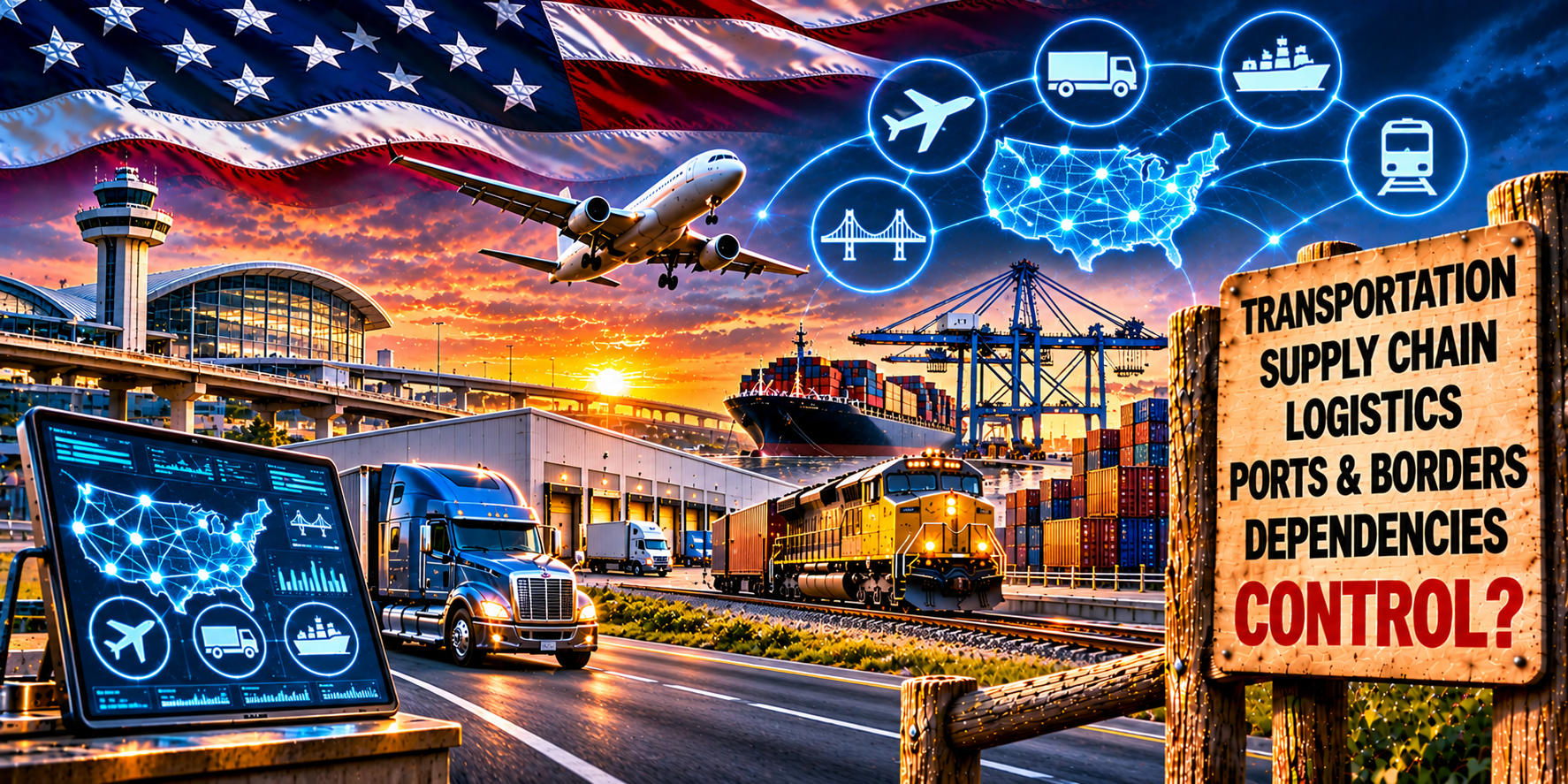
AMERICA'S
TRANSPORTATION &
SUPPLY CHAIN SECURITY
FORENSIC AUDIT: Who Controls the Movement of America's Essential Goods?
Follow the evidence across ports, highways, freight rail, aviation, warehouses, foreign suppliers, logistics technology and the infrastructure that sustains American commerce.
OPEN THE INVESTIGATION COMMAND CENTER& OWNERSHIP
FREIGHT NETWORKS
DEPENDENCIES
& CYBERSECURITY
& RESILIENCE
01 | Documented Failures
What Happens When a Transportation Chokepoint Fails?
Transportation disruptions may result from cyber intrusions, accidents, physical damage, labor disputes, weather or mechanical failures. The cause must be established before evaluating cascading effects.
2024 Francis Scott Key Bridge Collapse
A container ship struck the bridge in Baltimore, causing its collapse and disrupting port access and road transport. Review NTSB findings and official port reopening records; this event is not established as a cyberattack.
2021 Colonial Pipeline Ransomware
A ransomware attack on business IT prompted Colonial Pipeline to shut down pipeline operations temporarily. This concerns energy transportation and downstream fuel logistics; distinguish the IT compromise from confirmed direct operational technology compromise.
2023 MOVEit Data Theft
Mass exploitation of a managed file transfer vulnerability affected many organizations. Investigate exposure of logistics and supply-chain partners individually rather than assuming all transport networks were disrupted.
2021 Suez Canal Obstruction
The Ever Given grounding blocked a major international shipping corridor, illustrating geographic chokepoints and rerouting constraints; it occurred outside the United States but affected global shipping.
02 | Historical Reconstruction
Turning Points in America's Transportation and Trade Dependencies
1956Interstate Highway System
The Federal-Aid Highway Act of 1956 supported construction of the Interstate Highway System. Evaluate freight benefits, maintenance burdens and route concentration using FHWA records.
1970sContainerization and Logistics Transformation
Intermodal shipping expanded and reshaped ports, rail and trucking. Investigate gains in efficiency and dependence on terminals, cranes, chassis and global routing.
1980Staggers Rail Act and Motor Carrier Act
Major U.S. freight deregulation legislation changed market structures. Assess effects using verified rates, carrier counts, network access and investment data.
2001Post-9/11 Transportation Security Changes
Federal transportation and border security systems were reorganized. Distinguish aviation, maritime, freight and customs responsibilities.
2020–22Pandemic-Era Supply Chain Disruption
Port congestion, manufacturing interruptions, labor constraints and changing demand exposed interconnected vulnerabilities. Measure impacts by commodity, route and date.
2024Port of Baltimore Disruption
Reconstruct the bridge collapse, channel restrictions, alternate routing and restoration with NTSB, USCG and port authority records.
03 | Ownership and Decision Rights
Who Owns and Operates America's Transportation Infrastructure?
Asset ownership, regulatory oversight, dispatch control, operating licenses and supply-chain contracts are distinct forms of authority.
Roads and Bridges
Map federal funding, state and local ownership, maintenance responsibility, toll operators and emergency closure authority.
Ports and Terminals
Distinguish public port authorities, private terminal operators, shipping lines, harbor pilots, customs agencies and federal navigation responsibilities.
Railroads and Trucking
Investigate freight rail infrastructure owners, common-carrier obligations, trucking operators, brokers, intermodal terminals and labor dependencies.
Air Cargo and Border Systems
Trace airports, carriers, air traffic management, customs screening, cargo handling and international agreements.
04 | System Dependency Mapping
Follow Essential Goods From Origin to Destination
The same shipment may cross manufacturing, customs, ports, rail, trucking, warehouses, digital dispatch and last-mile delivery. Each transfer introduces operational dependencies.
Origin and Production
Raw materials, agriculture, factories, overseas suppliers, purchase orders and production schedules.
Freight Movement
Ocean vessels, terminals, rail interchanges, highways, fuel availability, drivers and cargo handling.
Warehousing and Distribution
Inventory management, cold storage, sorting, barcode systems, logistics software and regional distribution centers.
Final Delivery and Critical Services
Hospitals, grocery stores, pharmacies, water treatment, emergency services and industrial maintenance.
05 | Cybersecurity and Digital Logistics
Can Freight Keep Moving When Logistics Technology Fails?
Modern transport depends on operational technology, industrial systems, enterprise applications, positioning services and shared vendors.
Ports and Terminal Systems
Assess crane controls, terminal operating systems, vessel scheduling, access control and remote vendor connections.
Freight and Fleet Technology
Review dispatch platforms, electronic logging, telematics, route optimization, warehouse systems and software update integrity.
Identity and Supply-Chain Trust
Protect carrier onboarding, freight-payment instructions, privileged access, cargo documentation and business email workflows.
Continuity and Restoration
Exercise manual dispatch, paper manifests where lawful, alternate communications, offline inventory reconciliation and staged service restoration.
06 | SWOT / TOWS
Turn Concentrated Dependencies Into Measurable Resilience
A forensic SWOT should identify verified local or national conditions, then translate them into owned, testable controls.
Strengths
Extensive multimodal infrastructure, experienced operators, established emergency response and regional alternatives.
Weaknesses to Verify
Aging structures, limited route redundancy, single terminals, scarce equipment, vendor concentration and opaque supplier tiers.
Opportunities
Infrastructure modernization, domestic capacity, secure digital coordination, regional inventories and cross-sector exercises.
TOWS — Correct and Prevent
Map chokepoints, harden critical systems, diversify feasible suppliers, test rerouting, coordinate emergency freight priorities and measure recovery.
07 | Corrective Action and Prevention
Protect the Flow of Essential Goods Before the Next Disruption
Actions should be proportionate to the sector, commodity and local risk—not a one-size-fits-all national prescription.
Households and Communities
Maintain reasonable essential supplies, know local emergency distribution channels and plan for temporary fuel, food or medicine delays.
Small Businesses
Identify single-carrier and single-supplier exposures, protect payment changes, test alternate freight routes and document inventory continuity.
Infrastructure Operators
Inventory critical systems, exercise IT/OT incident response, maintain equipment spares and test multimodal restoration plans.
Government and Regional Partners
Publish bridge and port resilience priorities, coordinate emergency access, identify essential-goods corridors and verify mitigation outcomes.
08 | Evidence Register
Primary Sources and Open Verification Work
Transportation policy, infrastructure and official reports
Freight, transportation networks and economic data
Transportation accident investigations and safety recommendations
Highway infrastructure and bridge data
Ocean shipping regulation and competition
Ports, maritime infrastructure and shipping
Transportation systems cybersecurity and critical infrastructure guidance
Port safety, waterways and maritime security
INVESTIGATE. VERIFY. CORRECT. REBUILD.
Evidence 010 | America's Transportation & Supply Chain Security — FORENSIC AUDIT
RETURN TO FORENSIC AUDIT COMMAND CENTER