EVIDENCE 019 | NATIONAL CRITICAL INFRASTRUCTURE INVESTIGATION
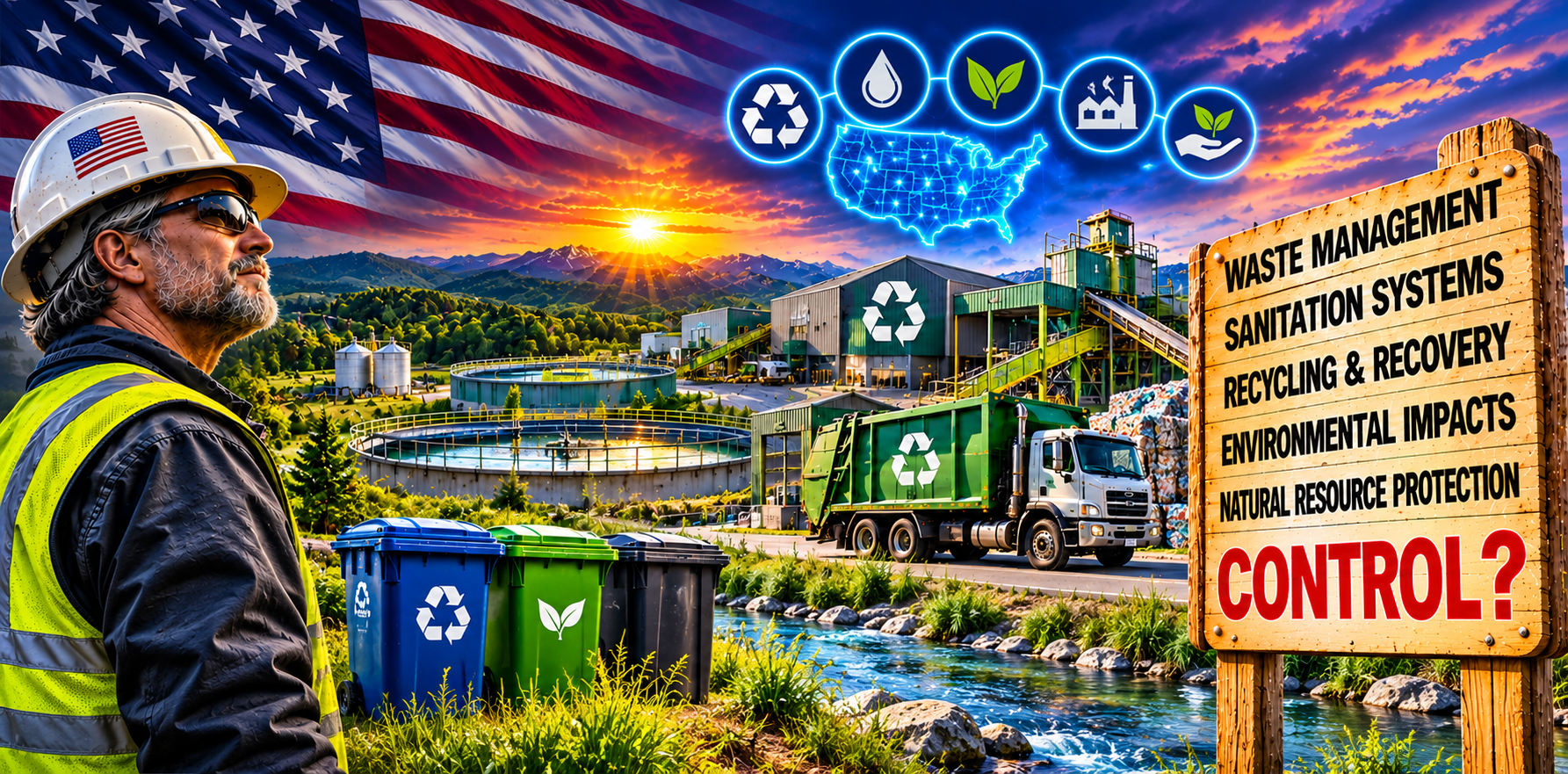
AMERICA'S
WASTE MANAGEMENT,
SANITATION &
ENVIRONMENTAL SECURITY
FORENSIC AUDIT: Who Controls America's Essential Waste and Sanitation Systems?
Investigate disposal, hazardous materials, resource recovery, operational dependencies and community protection.
OPEN THE INVESTIGATIONCOMMAND CENTER01 | Documented Incidents and Consequences
Investigating Failures in Essential Environmental Systems
A verified event is the starting point for reconstructing failures—not proof of a broader motive.
2014 Elk River Chemical Spill
A chemical leak into West Virginia’s Elk River disrupted drinking-water use. Examine incident records, facility safeguards, public notices and regulatory follow-up.
2023 East Palestine Derailment
A Norfolk Southern freight train derailed in Ohio, involving hazardous materials and a controlled vent and burn. Examine NTSB findings, monitoring, cleanup and responsibilities.
2021 Oldsmar Water Treatment Intrusion
An unauthorized remote-access incident at a Florida water treatment facility highlighted utility access-control risks. Drinking-water treatment is a related but distinct sector.
Audit Boundaries
Distinguish solid waste, wastewater, drinking water, industrial chemical handling and hazardous-material transport. Their regulators and controls differ.
02 | Historical and Regulatory Milestones
How Waste and Sanitation Oversight Evolved
Follow how American waste management evolved from local disposal into regulated, interconnected services.
1970 — EPA Established
The Environmental Protection Agency began operating in 1970, consolidating federal environmental responsibilities.
1972 — Clean Water Act
Federal water-pollution controls expanded under the Clean Water Act, with permits and water-quality requirements affecting wastewater discharges.
1976 — Resource Conservation and Recovery Act
RCRA established a framework for solid and hazardous waste management, including cradle-to-grave oversight of regulated hazardous waste.
1980 — CERCLA / Superfund
CERCLA created federal authority to address releases or threatened releases of hazardous substances at contaminated sites.
2000s–Present — Digital Operations
Route optimization, connected equipment, plant control systems and cloud platforms improved operations while creating new cybersecurity dependencies.
03 | Ownership, Authority and Accountability
Who Owns, Operates and Regulates the System?
Who owns the facility is not necessarily who controls permits, contracts, hazardous materials or emergency response.
Municipal Services and Franchises
Review local sanitation authorities, municipal utilities, exclusive collection contracts, tipping fees and renewal conditions.
Private Operators and Landfill Ownership
Map beneficial ownership, disposal sites, transfer stations, hauling contracts, landfill capacity and financial assurance.
State and Federal Regulation
Identify EPA, state environmental agencies, local health departments, permit issuers and enforcement responsibilities.
Community Rights and Transparency
Assess environmental monitoring, public notices, complaint records, land-use decisions, tribal interests and environmental-justice considerations.
04 | Critical Dependencies and Cascading Failure
What Happens When Collection or Treatment Stops?
Waste and sanitation continuity depends on equipment, labor, fuel, treatment chemicals, power, transportation and safe disposal.
Collection and Transfer
Evaluate truck fleets, fuel, drivers, transfer stations, route software, labor agreements and alternate pickup capacity.
Wastewater and Treatment
Map pumping, aeration, power, backup generators, treatment chemicals, laboratory testing and permitted discharge pathways.
Hazardous Materials
Identify specialized containers, licensed transporters, treatment capacity, emergency contractors and compliant disposal destinations.
Recycling and Recovery
Trace commodity buyers, sorting equipment, export exposure, contamination rates and markets for recovered materials.
05 | Cybersecurity and Operational Integrity
Protect the Digital and Physical Control Plane
Sanitation systems increasingly depend on connected industrial controls, billing, dispatch and vendor access.
Operational Technology
Inventory pumps, PLCs, SCADA, industrial sensors and remote-maintenance channels; segment networks and protect safety-critical operations.
Dispatch and Route Systems
Protect fleet telematics, dispatch platforms, driver devices, customer portals and contractor identities against ransomware and account takeover.
Chemical and Environmental Data Integrity
Safeguard sampling records, laboratory results, manifest data and compliance reporting with access controls, provenance and independent verification.
Recovery and Manual Operations
Maintain offline backups, tested restoration, spare controllers, safe manual workarounds and emergency public communications.
06 | SWOT / TOWS Assessment
Assess Strengths, Gaps and Corrective Choices
Translate the sector’s strengths and weaknesses into realistic continuity controls.
Strengths
Established collection networks, regulated facilities, engineering expertise, environmental monitoring and resource-recovery technology.
Weaknesses to Verify
Aging equipment, constrained landfill capacity, sole-source contractors, limited redundancy, fragmented data and uneven cyber maturity.
Opportunities
Regional mutual aid, organics recovery, safer material substitution, improved recycling economics, asset visibility and secure automation.
Threats and TOWS Actions
Extreme weather, chemical incidents, cyber disruptions, transport interruptions and financing pressure. Diversify disposal options and test regional emergency agreements.
07 | Corrective Measures and Prevention
Restore Local Capacity and Reduce Fragility
Build resilient systems before a hazardous incident or prolonged service interruption.
Households and Neighborhoods
Know local collection and hazardous-waste disposal rules; store chemicals safely; follow official boil-water or contamination notices where relevant.
Businesses and Institutions
Inventory hazardous materials, maintain waste manifests, verify licensed contractors, and plan for service interruptions.
Utilities and Operators
Maintain equipment and cyber asset inventories, alternative haul routes, backup power, environmental sampling, and incident response exercises.
Local and State Government
Publish contract accountability, environmental performance, contingency capacity and coordinated emergency communications.
08 | Primary-Source Evidence Register
Verify the Record Before Drawing Conclusions
Official starting points for laws, incident records, environmental monitoring, public health and cyber safeguards. Validate incident-specific findings and current links before publishing definitive claims.
INVESTIGATE. VERIFY. CORRECT. REBUILD.
Evidence 019 | America’s Waste Management, Sanitation & Environmental Security — FORENSIC AUDIT
RETURN TO FORENSIC AUDIT COMMAND CENTER